
"ZD-13 review"
4750 article(s) found

The reason why Humbela Manor in Ethiopia has won the high score of Coffee Review and the way of terrain harvest
Professional barista exchanges please follow the coffee workshop (Wechat official account cafe_style) Ethiopia washed Humbera Manor Benti Nenqua single farm slow drying 105 batches of flavors: sweet flower aromas of egg blossoms, lemon, lime, citrus, exotic juice aromas, middle and finish for elegant blueberry, strawberry aromas and sweet and sour, solid overall feeling

Colombia Coffee History Review Colombia Coffee Quality Introduction
Professional barista exchanges, please pay attention to coffee workshop (Weixin Official Accounts cafe_style) Colombia coffee history: The history of coffee cultivation in Colombia can be traced back to the Spanish colonial era in the 16th century. There are also many sayings about the history of coffee in Colombia: First, it is said that it came from Haiti Island in the Caribbean Sea through El Salvador in Central America. Second:

Go back to 1939 and watch the first game of hand-brewing coffee! Review the knowledge of coffee history and culture
At the public library in New York, a set of photos was recently sent out. In 1939, the 20th World Exposition was held in Queens, New York, USA. You may wonder what this exposition has to do with coffee. It was at this Expo that perhaps the world's first coffee brewing competition was held, which is likely to be the previous life of the World hand Coffee Competition. You can find it in the picture.

Six steps to evaluate coffee cups
There are six steps in coffee cup evaluation, describing the aroma, aroma, taste, smell, aftertaste and mellowness of coffee.

Kenya AA Review Ndebes Sun-baked Kenya Hand Brewed Coffee Single Product Kenya AA Features
Professional coffee knowledge exchange More coffee bean information Please pay attention to coffee workshop (Weixin Official Accounts cafe_style) Kenya Endebess Sunlight AA Kenya Endebess Natural AA Sunlight Kenya is less common in the market, probably because of the excellent quality of Kenyan washing, coupled with the loss rate of sunlight, high labor cost, past sunlight Kenya

There are six steps in coffee cup evaluation.
There are six steps in coffee cup evaluation, describing the aroma, aroma, taste, smell, aftertaste and mellowness of coffee.

Introduction, varieties and reviews of Ethiopia Yega Shefi
Pay close attention to the coffee comment (Weixin Official Accounts vdailycom ) and find that the beautiful coffee shop opens its own small shop. When it comes to Ethiopia, it is better to talk about the origin of coffee first. About the sixth century A. D., an Arab shepherd, Kardi, saw that every goat was extremely excited and excited when he drove sheep to the Ethiopian grassland to graze. He felt very strange. Later, he passed by

Six steps to identify coffee
1. Fragrance: the first step in cup evaluation is to evaluate the aroma of coffee beans. Grind 10 grams of coffee, put it in 3-5 sample cups, and then breathe hard at the gas released by the freshly crushed coffee cells. The characteristics of the aroma indicate the essence of the taste of coffee beans: the sweet smell indicates that its taste is sour; the pungent smell indicates that its taste is irritating. The power of aroma
Morning Review: ICE Arabica Coffee Futures fell
New YORK / London (Reuters)-Arabica coffee futures fell on Wednesday, retreating from a two-and-a-half-year high hit this week, with intraday volatility as buyers remained on the sidelines and speculator-led buying sprees subsided. Speculators bought heavily this week amid fears that dry weather in Brazil could hurt production. ICE cocoa futures fell to a low hit in May
Morning Review: Arabica Coffee Futures decline
New YORK / London (Reuters)-ICE raw sugar futures closed higher on Friday for the first time in seven sessions, buoyed by end-users and technical buying after falling to a five-and-a-half-week low yesterday. ICE cocoa futures were technically driven away from the five-and-a-half-month low hit this week, while Arabica coffee futures fell on forecasts of rain in Brazil, the main grower.
Book Review: God in a Cup
Feet dangling, a good book on the sofa, a cup of hot coffee in the other hand, this is the only way for a reader. The smell of parchment mixed with it was undoubtedly intoxicating. Author: Michaele Weissman Publication Year: 2008-5 Pages: 268 Price: 211.00 ISBN: 9780470173589 Recommended Purchase Address: Amazon Profile: A Cup of Coffee Can Be Revealed
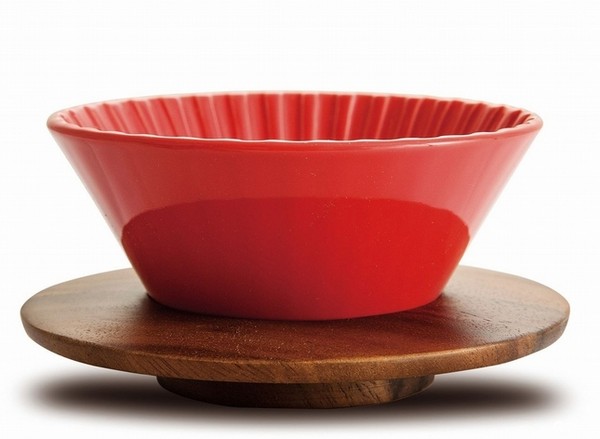
Coffee Uncle Reviews Origami Dripper
Do you need to learn origami before drinking coffee? This Origami Dripper is directly named after the Japanese pronunciation of "folding paper". Through the combination of ceramic and wood materials, it gives the user a warm and harmonious touch, and has 8 colors to choose from. It can be said that it is quite a healing coffee appliance. This origami filter cup is sold exclusively in Japan by Trunk in Nagoya.
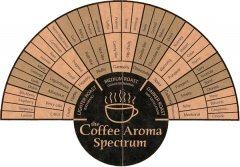
SCAA coffee cup testing process
1. Fragrance: the first step in cup evaluation is to evaluate the aroma of coffee beans. Grind 10 grams of coffee, put it in 3-5 sample cups, and then breathe hard at the gas released by the freshly crushed coffee cells. The characteristics of the aroma indicate the essence of the taste of coffee beans: the sweet smell indicates that its taste is sour; the pungent smell indicates that its taste is irritating. The power of aroma
Six steps to taste coffee
There are six steps in coffee cup evaluation, describing the aroma, aroma, taste, smell, aftertaste and mellowness of coffee. 1. Fragrance: the first step in cup evaluation is to evaluate the aroma of coffee beans. Grind 10 grams of coffee, put it in 3-5 sample cups, and then breathe hard at the gas released by the freshly crushed coffee cells. The characteristics of the aroma indicate the essence of the taste of coffee beans:
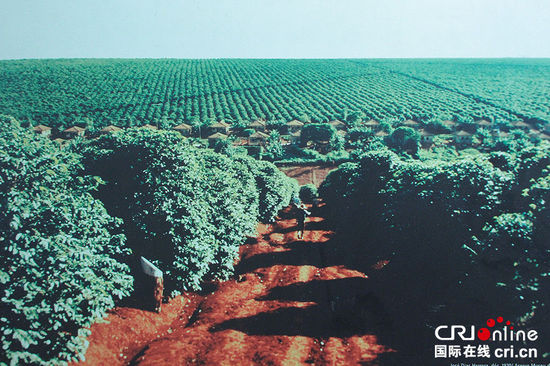
Review the coffee history of Brazil in the Coffee Museum
Brazil's Coffee Manor International online report (Reporter Zeng Yun): Brazil is the largest coffee producer and the second largest coffee consumer in the world. Zeng Yun, a reporter based in Brazil, will take you to the Coffee Museum in Santos, the coffee city of Brazil, to review the history of coffee in Brazil. In Brazil, wherever you go, you can have coffee in the morning or at night. No.

Introduction to the Cup Review of Antigua Coffee
Following Cafe Review (official Wechat account vdailycom) found that Antigua Coffee has opened a small shop in Beautiful Cafe: aroma 7.8; flavor 7.85; acidity 7.95; balance 7.63; overall 7.78; mellow 7.85; finish 7.60 delicate and balanced, with rich aroma and excellent sweetness. Antigua Valley (Antigua Valley) has the longest history in Guatemala.
Morning review: Arabica coffee futures rebounded from September lows as processors bought
New YORK / London (Reuters)-Arabica coffee futures rebounded on Tuesday, closing slightly higher, trading volatile throughout the day and trading volume as processors bought after prices hit a three-week low. Technical buying after prices fell below the key support level also helped push the market higher.
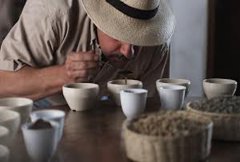
Coffee common sense SCAA coffee cup testing process
1. Fragrance: the first step in cup evaluation is to evaluate the aroma of coffee beans. Grind 10 grams of coffee, put it in 3-5 sample cups, and then breathe hard at the gas released by the freshly crushed coffee cells. The characteristics of the aroma indicate the essence of the taste of coffee beans: the sweet smell indicates that its taste is sour; the pungent smell indicates that its taste is irritating. The power of aroma

What is caffeine? How much a day is normal? What does coffee have to do with caffeine?
Professional coffee knowledge exchange more coffee bean information Please pay attention to the coffee workshop (Wechat official account cafe_style) caffeine plays an important role in the busy life of modern people. Many people wake up with a cup of coffee in the morning, their blood sugar rises after lunch, and their minds feel drowsy. Many people will want to have another cup of caffeine to refresh themselves, such as coffee, tea and carbonated drinks.

Six steps of coffee cup evaluation
There are six steps in coffee cup evaluation, describing the aroma, aroma, taste, smell, aftertaste and mellowness of coffee. 1. Fragrance: the first step in cup evaluation is to evaluate the aroma of coffee beans. Grind 10 grams of coffee, put it in 3-5 sample cups, and then breathe hard at the gas released by the freshly crushed coffee cells. The characteristics of the aroma indicate the essence of the taste of coffee beans: